

Eating out case studies
What would you do?
Explore two scenarios you may encounter if you have diabetes and you’re eating out.
Read about each person’s situation, then let us know what you would do if you were in their shoes. You can post your responses at the bottom of the page. You will also be able to see what others would do.
If you’re not comfortable sharing your thoughts, don’t worry! Feel free to take a look at what others have said.
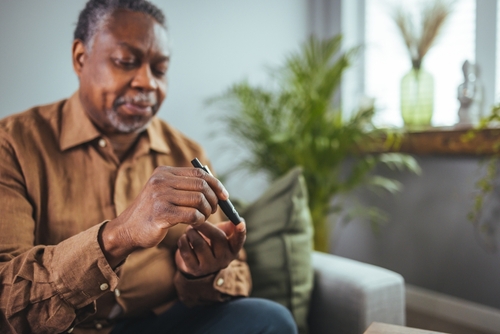
Marcus, 54
Type 1 diabetes · basal-bolus insulin · carb counting
About Marcus
Marcus has had type 1 diabetes since his late twenties. He manages it with a basal-bolus insulin regime — a long-acting insulin once a day and a rapid-acting insulin with meals — and counts carbohydrates to calculate his mealtime doses. He is a primary school teacher and tries to keep his routine as consistent as possible.
The situation
Tonight Marcus is at a work retirement dinner with colleagues at a local restaurant. The restaurant is busy and service is running very late. He took his rapid-acting insulin 30 minutes ago, estimating when the food would arrive — but the waiter has just told the table it will be at least another 45 minutes.
Marcus is starting to feel shaky, sweaty, and light-headed. He checks his glucose: it reads 3.8 mmol/L and dropping. He has glucose tablets in his jacket pocket but doesn’t want to make a fuss in front of his colleagues.
“Maybe I can just wait it out. But if I take the tablets now, will my levels shoot too high once the food arrives?”
What would you do if you were Marcus? Would you treat the hypo straightaway, wait and see, or do something else?
Suggested approach
Marcus should treat the hypo immediately — waiting is not safe. At 3.8 mmol/L with symptoms and a falling trend, the rapid-acting insulin already in his system will continue to pull his glucose down.
The NHS recommends the 15g rule: take 15g of fast-acting carbohydrate (such as 4–5 glucose tablets, 150–200ml of a non-diet sugary drink, or 5 jelly babies), wait 15 minutes, then re-check. If still below 4 mmol/L, repeat.
Taking glucose tablets will not cause a dangerous spike when the meal arrives. The carbohydrate in a hypo treatment is small, and Marcus can adjust his meal dose once he can see what he is eating. His diabetes team can advise on this.
He does not need to make a big announcement. A quiet word to the person beside him is enough. Diabetes UK advises people with type 1 to always carry fast-acting glucose when eating out — Marcus has done exactly that.

Stacey, 72
Type 1 diabetes · CGM · carb counting
About Stacey
Stacey was diagnosed with type 1 diabetes in her early thirties. She has decades of experience managing her condition and uses a carb-counting approach with a rapid-acting insulin analogue at mealtimes and a long-acting basal insulin at night. She also wears a continuous glucose monitor (CGM).
The situation
Tonight Stacey is at a restaurant with close family to celebrate her daughter’s engagement — a joyful, busy occasion with a large sharing menu and wine on the table. The restaurant has prepared multiple courses: bread and dips, starters, a pasta dish, a main course, and a dessert platter, arriving throughout the evening at unpredictable intervals.
Stacey is finding it hard to estimate the total carbohydrate across all the courses. She doesn’t want to be distracted from the celebration, but she knows she needs to manage her insulin carefully across what could be a two-hour meal.
“I’ve managed my diabetes for years, but a meal like this is genuinely tricky. If I dose for everything upfront I could hypo badly. And the wine makes it even more complicated — I know alcohol can affect my levels hours later, even when I’m asleep.”
What would you do if you were Stacey? How would you manage your insulin across a long, unpredictable meal — and what would you need to think about with alcohol involved?
Suggested approach
With a long, unpredictable sharing meal, the safest strategy is to dose in stages rather than all at once. Stacey can take a small dose for each course as it arrives once she can see what she is actually eating, rather than estimating the whole meal upfront. Her diabetes team can advise on this approach.
Her CGM is essential here. Checking the glucose trend — not just the number — throughout the meal lets her respond in real time. She should keep fast-acting glucose (such as glucose tablets) to hand and make sure her CGM low alerts are switched on.
Alcohol is an important consideration. It can inhibit the liver’s ability to release glucose, causing delayed hypoglycaemia several hours after drinking — including during sleep. NHS and Diabetes UK guidance recommends always eating carbohydrate-containing food alongside alcohol, never drinking on an empty stomach, and checking glucose before bed. Stacey may want to aim for a slightly higher glucose level at bedtime than usual as a precaution.
Stacey’s many years of experience are a real asset. Trusting her CGM, dosing cautiously in stages, and checking before she sleeps are the key steps for a safe and enjoyable evening.
Add your contribution and then click on the button to reveal guidance and compare your ideas with ours:
i eat what i want i just make sure its covered by insolin
split insulin dose and regular checks
for Marcus, yes treat the hypo first.
for Stacey, split the dose keep an eye on the effects, try to minimise alcohol with non alcohol drinks of choice.
Marcus should treat the Hypo straight away, then check and inject as the meal arrives.
Stacey should inject per course.
No
The links don’t work. I emailed them weeks ago but no answer. Disappointing.
Friends what eat heavy carb dinner and a pudding would split
Due to anxiety I prefer to split my dosage when I’m out just to watch how my diabetes is
I’ve always spilt Insulin regularly for food intake, company and time for food to arrive at the table or home.
sorry no pictures
no pictures to click
As before me no pictures
Sorry no pictures to click on.
I can`t find the pictures.
Read
Read
I would split insulin for the first one. Adjust the other half after the absorption of alcohol
Malcolm should carb count throughout the day and adjust accordingly
read
For the 1st I would carb count and take an injection before and after pizza. Check again before alcohol.
The 2nd I would carbon count throughout the day and adjust if need be.
I would split the insulin and keep eye on blood sugars for first one
And second one would carb count through out day and adjust if need be
I would split insulin for the first one. Adjust the other half after the absorption of alcohol
Malcolm should carb count throughout the day and adjust accordingly
zola should take insulin half before the meal and half after as she is having pizza. Malcom should carb count and take insulin throughout the day.
Estimate insulin for a std Pizza and inject about 20 mins before. Review BG levels and apply a correction factor. If you have a sensor.
Fast acting when food arrives
Sorry, I couldn’t see all the stages & info given. For a meal out in the evening I would suggest 2 injections maybe before & during.
For the wedding I would suggest several injections spaced out through the day & a lot of checking of blood sugars.
Regular doses of basal throughout the day
Unless Zola knows what she is having and when it will be served she should ask the serving staff when it will be coming and air on the side of caution and do a top up fast acting when the food arrives.